Temperature gets most of the attention when people talk about EV range, but a cold day and a wet, windy day are not necessarily the same thing.
Rain and wind can both change how much energy a car needs to cover a journey.
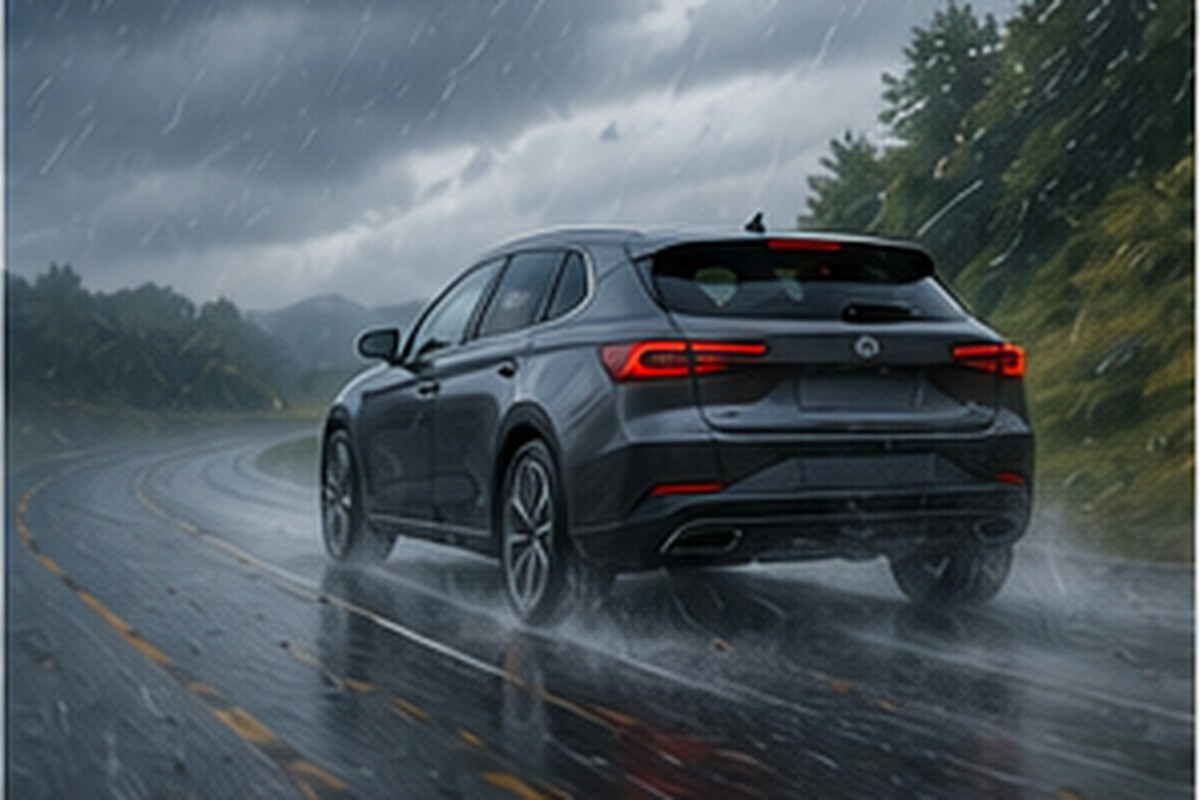
Rain increases rolling resistance
Tyres have to move water out of the way and the road surface itself changes how easily the car rolls.
The effect can be particularly noticeable in sustained heavy rain, where the car is constantly pushing through water on the road surface.
A headwind changes the air speed the car sees
Suppose you are travelling along a motorway at a steady speed into a strong headwind. From the car's point of view, the air is passing over the body faster than the road speed alone suggests.
Aerodynamic drag rises as that effective air speed rises, so the car needs more power to maintain the same speed.
A tailwind can work the other way.
Wet weather often brings other energy use
Bad weather can also mean more use of:
- cabin heating;
- demisters;
- wipers;
- lights;
- heated windows and mirrors.
Those accessories are not usually the biggest part of motorway energy use, but they add to the total.
Why one journey should not define a car
If your EV performs badly on one stormy trip, that does not automatically mean its normal range is poor.
Equally, a particularly good calm summer journey should not be treated as the guaranteed range for the rest of the year.
Large owner datasets are useful precisely because they smooth out some of those one-off conditions while still letting us look at broad categories such as cold, average and hot journeys.
When planning an important long trip in poor weather, leaving extra charging margin is more sensible than assuming the car will repeat its best-ever efficiency.