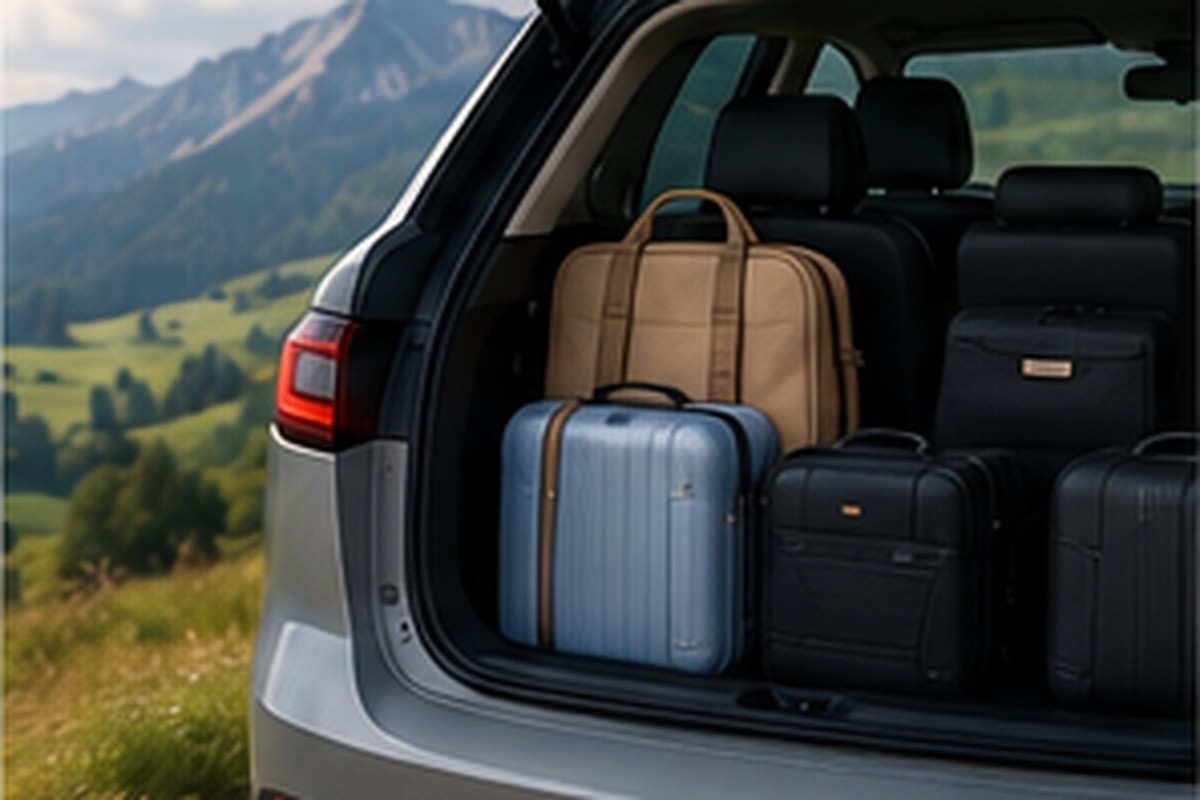
Pack an electric car for a family holiday and it is reasonable to wonder how much range all those passengers and bags will cost.
Extra weight matters, but the answer is not as simple as applying one percentage to every car and journey.
More mass takes more energy to move
A heavier car needs more energy when accelerating and climbing hills.
In stop-start driving, where the vehicle is repeatedly changing speed, the extra mass can matter more than on a perfectly steady flat cruise.
Regenerative braking can recover some energy when slowing, but it cannot make the extra mass completely free.
Motorway aerodynamics can matter more
Once a car is cruising steadily at motorway speed, aerodynamic drag becomes a major part of energy use.
That means a roof box or bikes mounted outside the body can sometimes have a more noticeable effect than luggage packed neatly inside the boot, because they change how the car moves through the air as well as adding weight.
'Fully loaded' is deliberately simple on MyEVRange
We do not ask people to weigh every passenger and suitcase.
A contributor simply chooses between driver only and fully loaded.
The idea is to capture a useful real-world difference without turning a 30-second contribution into an engineering survey.
As more journeys are added, those broad groups can show whether a particular model seems especially sensitive to carrying a heavy load.
What should you do before a long loaded trip?
If the car is packed, the weather is poor and the journey is mostly motorway, plan with more reserve than you would for a light local trip.
The battery percentage used over your first leg will quickly tell you whether the original plan is realistic.