If you are shopping for an electric car, the first range figure you usually see is WLTP. It is useful, but it is often misunderstood.
WLTP is a laboratory test. It gives manufacturers and buyers a standard way to compare one car with another. That matters: without a common test, every manufacturer could quote range under whatever conditions made its car look best.
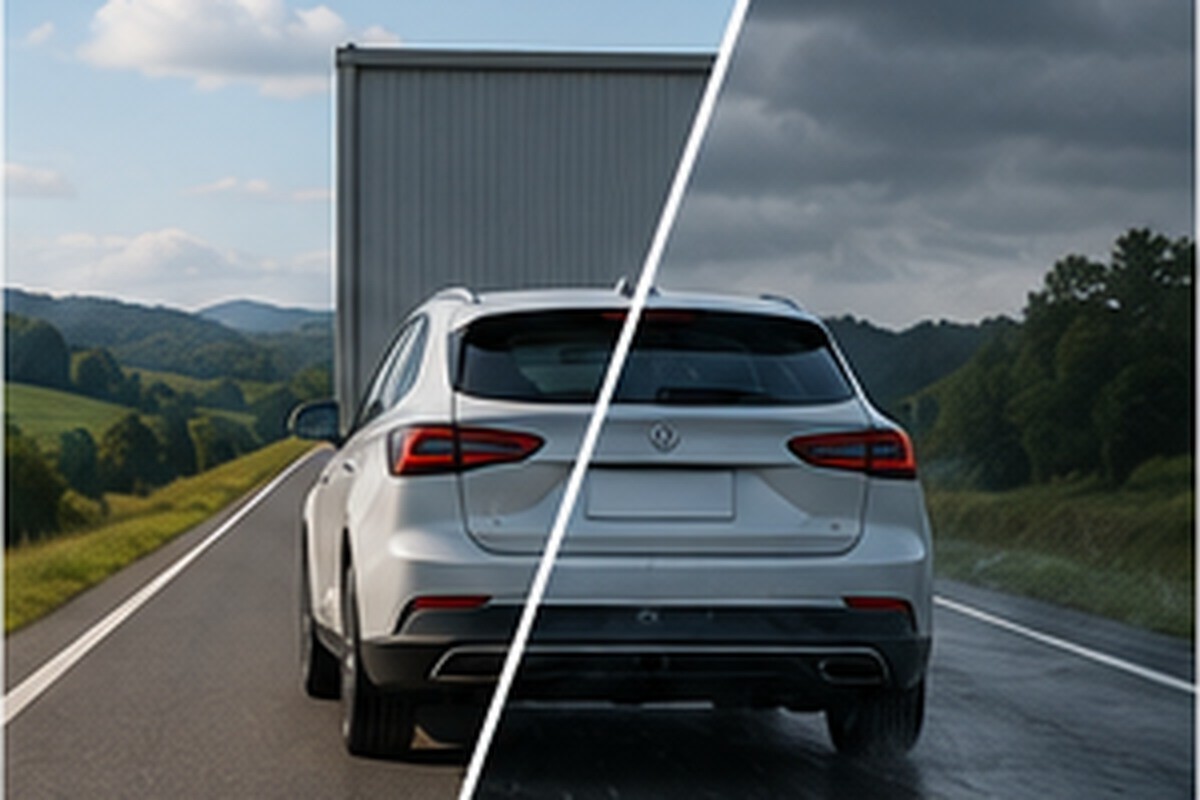
What WLTP does not tell you is exactly how far your car will travel on a wet January motorway run with the heater on, or on a gentle summer trip through town.
Why real range is different
An EV uses more or less energy depending on how and where it is driven. Speed matters. Temperature matters. Heating and air conditioning matter. Tyres, wheels, hills, wind and the amount of weight in the car all have an effect too.
That is why two owners of the same model can get noticeably different results without either of them being wrong.
WLTP should therefore be treated as a comparison figure, not a guaranteed tank-to-empty distance.
Is WLTP still useful?
Yes. It is one of the most useful figures on a specification sheet because every new car is tested to the same broad standard.
If Car A has a WLTP range of 320 miles and Car B has 220 miles, the first car will normally have the greater range in real use too. What WLTP is less good at showing is how much of that official figure each car tends to deliver in different conditions.
That is the gap MyEVRange is trying to fill.
What we show instead
On each car page we keep the official WLTP figure visible, then show other range figures separately.
When we have enough owner journeys, the main MyEVRange figure comes from those journeys. Drivers enter the distance travelled and the battery percentage used. We calculate the equivalent full-battery range rather than asking somebody to guess what their car can do.
We also break owner results down by cold, average and hot conditions, and by driver-only or fully loaded journeys. Where enough data exists, town, mixed and motorway figures are shown too.
Until the owner sample is large enough, you may also see clearly labelled published estimates or independent test figures. Those never get mixed into the owner average.
A simple example
Suppose a car has an official WLTP range of 300 miles.
One owner drives 180 miles and uses 70% of the battery. That journey works out at roughly 257 miles for a full battery.
Another owner drives in warmer, slower conditions and gets the equivalent of 290 miles.
Neither result makes the 300-mile WLTP figure “fake”. They are measuring different things.
What becomes useful is seeing hundreds of real journeys together. That tells you what owners are actually managing, how wide the spread is and how much conditions change the answer.
The number to look for when buying
There is no single perfect range figure. If you are comparing EVs, look at three things:
- the official WLTP range;
- the real-world average from a decent number of owners;
- the type of driving you actually do.
Someone commuting 20 miles through town has a very different use case from somebody doing 200-mile motorway days.
The aim of MyEVRange is not to replace WLTP. It is to put it in context.